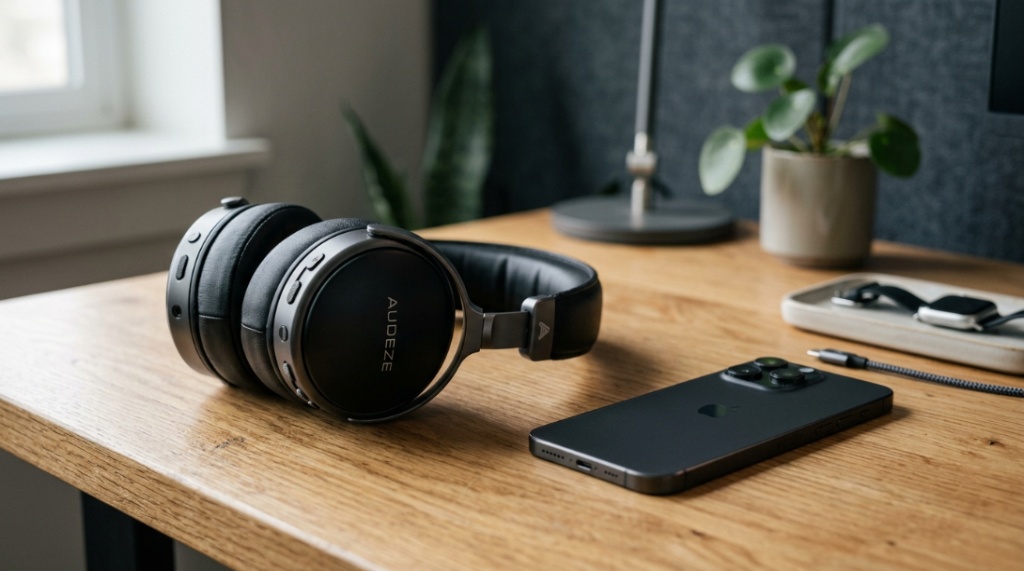
Wireless headphones have come a long way. What used to be a compromise — sacrificing audio quality for the freedom of no cables — is now a non-issue at mid and premium price points. But there’s still a big difference between wireless headphones that sound amazing and ones that just sound acceptable. Here’s how to find the ones that truly deliver.
The Wireless Audio Quality Myth (and the Truth)
Many audiophiles still believe wireless = inferior sound. Here’s the truth in 2025:
- Bluetooth has improved dramatically—Bluetooth 5.3 and 5.4 offer lower latency and more stable connections
- Modern codecs rival wired quality — LDAC can transmit up to 990kbps, approaching CD quality
- DAC quality matters more than wireless vs. wired — a great wireless DAC beats a mediocre wired one
The gap between wired and wireless audio quality has essentially closed for 95% of listeners. The remaining 5% are audiophiles using lossless sources with dedicated DAC/amp setups.
What Actually Determines Wireless Sound Quality?
1. Audio Codec Support
This is the single most important factor for best sound quality headphones. The codec determines how much audio data is transmitted wirelessly:
| Codec | Bitrate | Quality | Device Support |
|---|---|---|---|
| SBC | 328kbps | Basic | All Bluetooth devices |
| AAC | 256kbps | Good | Apple devices (excellent) |
| aptX | 352kbps | Better | Many Android phones |
| aptX HD | 576kbps | Great | Select Android phones |
| aptX Adaptive | 276–4608kbps | Excellent | Snapdragon devices |
| LDAC | 330–990kbps | Near lossless | Sony devices, Android 8.0+ |
| LC3 | Variable | Future standard | Bluetooth LE Audio devices |
Pro tip: The codec is only as good as both your headphones AND your source device support. Check what your phone supports before buying headphones for a specific codec.
2. Driver Quality and Size
Even with a perfect wireless connection, the driver is what creates the sound:
- Dynamic drivers (40mm+) — powerful bass, wide soundstage, great for most music
- Planar magnetic drivers — extremely detailed, accurate sound, typically in premium wireless models
- Balanced armature — precise mids and highs, less bass extension
Most wireless headphones use dynamic drivers, which is perfectly fine for great sound.
3. Digital-to-Analog Converter (DAC) and Amplifier Quality
Inside every pair of wireless headphones is a built-in DAC and amp. Higher-end headphones use better chips:
- Budget headphones — basic DAC chips, adequate performance
- Mid-range — quality DAC chips, good dynamic range
- Premium — flagship DAC/amp combos, audiophile-grade performance
4. Tuning and Frequency Response
How the manufacturer tunes the headphones affects the sound signature:
- Neutral/flat — accurate, reference-grade sound (audiophiles prefer this)
- V-shaped — boosted bass and treble, recessed mids (popular for pop/EDM)
- Bass-heavy — fun and punchy (good for hip-hop, electronic)
- Mid-forward — vocals and instruments stand out (great for jazz, classical)
Most quality headphones come with a companion app that lets you customize the EQ to your preference.
5. Connection Stability
Dropouts and interference destroy the listening experience regardless of how good the headphones sound:
- Bluetooth 5.0+ — look for this minimum
- Multipoint connection — connects to two devices simultaneously without degrading quality
- Antenna placement — quality headphones have antennas built into the headband for better range
How to Test Wireless Sound Quality Before Buying

If you can test in a store:
- Play a track you know intimately — familiar music makes differences more obvious
- Test bass extension — play something with deep sub-bass (below 60Hz)
- Test mid clarity — listen for vocal clarity and instrument separation
- Test treble detail — hi-hats, cymbals, and strings reveal treble quality
- Check soundstage — does the sound feel wide and 3D or narrow and flat?
- Test at different volumes — quality headphones sound good at both low and high volumes
Red Flags for Poor Wireless Sound Quality
- ❌ Only supports SBC — bottom of the barrel codec
- ❌ No mention of driver size or type
- ❌ No EQ or companion app
- ❌ Tiny ear cups — limits driver size and bass response
- ❌ Very lightweight headphones — often indicates small, cheap drivers
- ❌ No specifications listed by the manufacturer
While looking at specifications like driver size and frequency response helps, real-world performance often comes down to the industry’s top titans. As you narrow down your search, it is highly beneficial to choose between Bose QuietComfort and Sony noise cancelling headphones to see how these premium brands balance pure audio fidelity with everyday features.
Best Music Genres and Their Ideal Sound Signatures
| Genre | Ideal Signature | Look For |
|---|---|---|
| Hip-Hop / R&B | Bass-heavy | Strong sub-bass, clear vocals |
| Classical / Jazz | Neutral | Wide soundstage, natural timbre |
| Rock / Metal | V-shaped | Punchy bass, crisp highs |
| Pop / EDM | V-shaped | Fun, energetic presentation |
| Podcasts / Vocals | Mid-forward | Clear, detailed midrange |
Conclusion
Finding wireless headphones with truly best sound quality headphones-level performance means looking beyond the brand name and digging into codec support, driver quality, and tuning. With the right knowledge, you can find a pair that sounds absolutely stunning without a wire in sight.