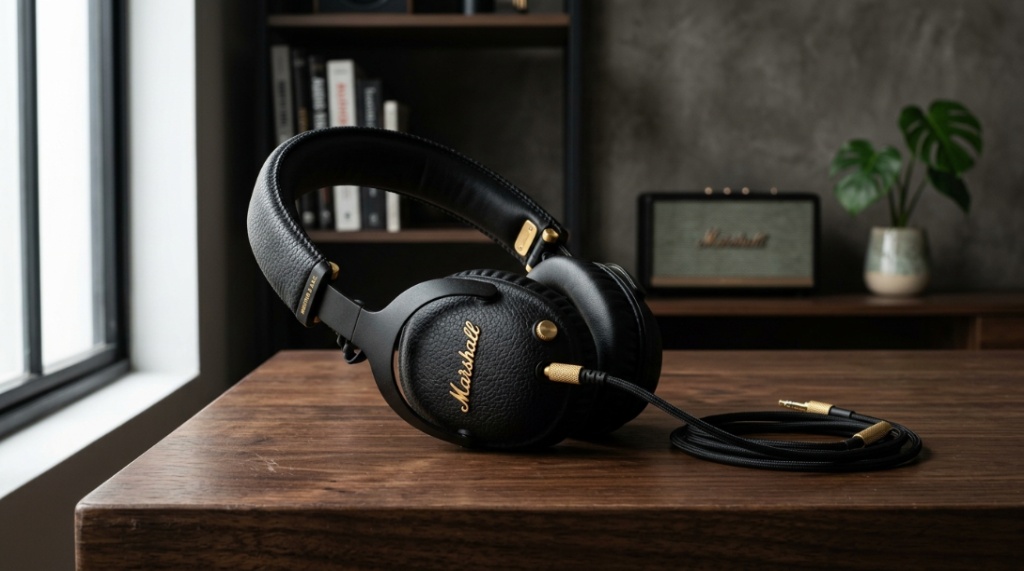
Marshall’s lineup has grown confusing enough that the most common question in headphone forums isn’t “are Marshall headphones good?” — it’s “which Marshall headphone is actually meant for me?” The best Marshall headphones for everyday listening in 2025 depend on one question most guides ignore: how many hours per day do you actually wear them, and does that time split between quiet and noisy environments? A commuter-office hybrid who wears headphones 6 hours across varying noise levels needs a completely different model than a home listener who wears them for 2-hour music sessions in silence.
A Marshall headphones buying guide for everyday listening identifies the model delivering the best intersection of comfort duration, sound quality, noise management, and battery life for YOUR specific daily audio pattern — not the “best” in abstract spec comparisons that ignore how real people use headphones across fragmented daily routines (morning commute → office work → lunch break → afternoon focus → evening commute → home relaxation).
This guide matches Marshall’s current lineup to specific everyday listening profiles so you invest in the model that enhances your actual daily routine rather than an idealized version of it.
What Defines “Everyday Listening” and Why Does It Matter for Model Selection?
Everyday listening means headphones worn across multiple daily contexts — commuting, working, relaxing — rather than for a single dedicated purpose. This multi-context demand is what makes choosing difficult because no single model excels in every environment. The best everyday model is the one with the fewest compromises across your specific context mix.
Common everyday listening patterns:
| Daily Pattern | Contexts Encountered | Critical Need | Best Marshall Model |
|---|---|---|---|
| Office worker (WFH) | Quiet home, video calls, music focus | Comfort 4+ hours, call quality | Monitor II A.N.C. |
| Commuter + office | Noisy transit, shared office, quiet breaks | ANC, comfort, multipoint | Monitor II A.N.C. |
| Student/casual listener | Walking, café, library, short sessions | Portability, battery, style | Major V |
| Active lifestyle (walking, errands) | Outdoor, mixed environments, brief sessions | Lightweight, portable, long battery | Major IV/V |
| Travel-heavy professional | Airports, flights, hotels, offices | ANC, battery, comfort, portability | Monitor II A.N.C. or Motif II (earbuds) |
Notice: the Monitor II A.N.C. appears most frequently because everyday listening for most adults involves 3+ hour sessions in variable noise — exactly what over-ear ANC headphones are designed for. The Major models win only when sessions are consistently short OR portability dramatically outweighs comfort needs.
Which Marshall Model Sounds Best for Everyday Music Listening?
The Monitor II A.N.C. delivers Marshall’s best overall sound quality with the fullest bass response and widest soundstage. The Major V follows closely with slightly thinner bass but excellent mid-range clarity. Both share Marshall’s signature warm sound that flatters rock, indie, jazz, and vocal-heavy music.
Sound quality ranking for everyday music:
- #1 Monitor II A.N.C.: Fullest, most immersive sound. Sealed over-ear design creates controlled acoustic environment. 40mm custom drivers with the deepest bass extension in Marshall’s lineup. Best for: dedicated listening sessions, music-as-primary-activity moments.
- #2 Major V: Updated drivers with improved clarity over Major IV. Punchy, engaging sound in a compact form. Bass is less extended than Monitor II but mid-range articulation is excellent. Best for: background music during activities, short focused sessions.
- #3 Major IV: Same signature warmth with slightly older driver tuning. Still sounds distinctly Marshall — warm, forward, musical. Slightly less refined than Major V but the difference is subtle.
- #4 Mid A.N.C.: On-ear with ANC processing. Sound is good but the processing adds slight coloration. Music sounds slightly less natural than Monitor II or Major IV/V without ANC active.
For all models, Marshall’s sound philosophy is consistent: warm mids, controlled punchy bass, slightly softened treble. Music sounds engaging and full rather than clinically accurate. If this signature appeals to you, every Marshall model delivers it — just at different levels of technical refinement.
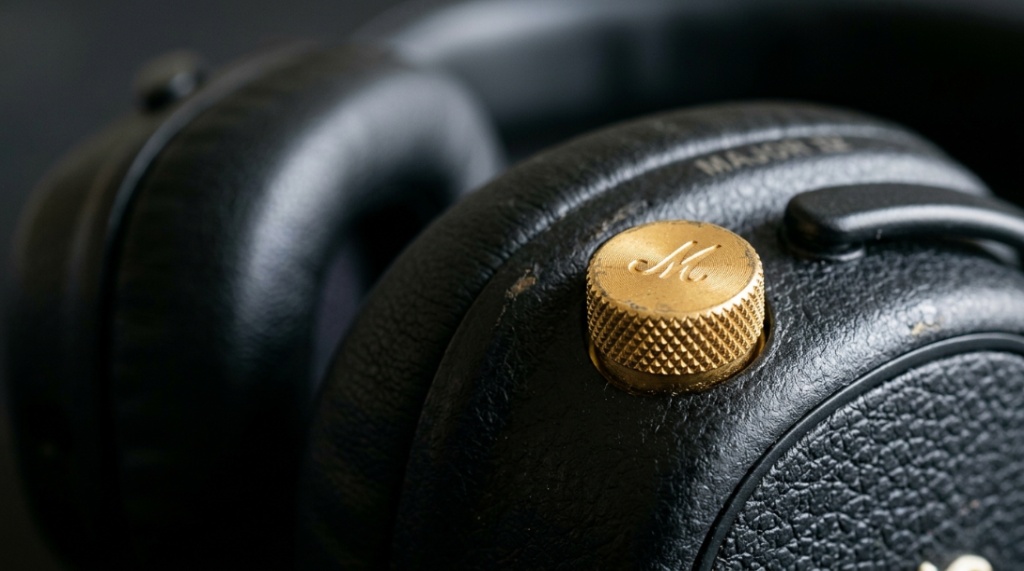
How Does Comfort Compare Across Marshall Models for Multi-Hour Daily Wear?
The Monitor II provides 4–6 hours of comfortable wear for most users. The Major IV/V provides 90–120 minutes before on-ear fatigue develops. The Mid A.N.C. falls between at approximately 2–3 hours. For everyday use exceeding 3 hours daily, only the Monitor II delivers sustainable all-day comfort.
Comfort duration by model:
- Monitor II A.N.C. (4–6 hours): Over-ear cushions surrounding the ear without direct contact. Moderate clamping force distributes weight around the skull. Heavier (320g) but well-distributed weight. Begins noticeable at 4–5 hours; uncomfortable at 6+ without breaks.
- Major V (90–120 minutes): On-ear pads press against ear cartilage. Initial comfort is good but pressure accumulates. Most users hit a “done” point between 90 minutes and 2 hours. Lighter weight (185g) helps — fatigue is pad pressure, not weight.
- Mid A.N.C. (2–3 hours): Slightly plushier on-ear pads than Major. ANC reduces the need for high volume (which contributes to fatigue). Better than Major for extended on-ear wear but still limited by the format.
- Motif II earbuds (3–4 hours): In-ear canal fatigue develops at 3–4 hours for most users. Different discomfort mechanism (canal pressure vs. cartilage pressure) but similar practical limit for non-custom ear tips.
How Important Is ANC for Everyday Listening?
If any portion of your daily listening happens in noisy environments (commuting, shared offices, cafés), ANC transforms the experience from fighting background noise to effortless listening. For home-only quiet-environment listeners, ANC adds cost without adding value — the non-ANC Major IV/V serves equally well in silence.
ANC value assessment:
- Essential if: You commute on public transit, work in open-plan offices, listen in cafés, or travel frequently. ANC reduces fatigue from unconsciously processing background noise — even if you don’t consciously notice it.
- Nice-to-have if: You occasionally encounter noise but primarily listen in quiet environments. The option is welcome but doesn’t justify doubling your budget.
- Unnecessary if: You work from home in a quiet space, listen primarily in controlled environments, and rarely encounter disruptive ambient noise during listening sessions.
The honest financial question: is your daily noise exposure worth the $100–$150 premium between the Major IV ($149) and Monitor II A.N.C. ($299)? For daily commuters and open-office workers — absolutely yes. For home-based listeners — probably not.
Explore the best Marshall headphones reviewed by use case with specific everyday scenario testing and ANC performance measurements.
What Battery Life Does Everyday Listening Actually Require?
For typical everyday patterns (3–6 hours daily across commute and work), any model with 20+ hours provides multi-day use between charges. The Major IV/V’s 80–100+ hour battery is extreme overkill for most — but eliminates charging as a consideration entirely, which some users value above all else.
- Monitor II A.N.C. (30 hours ANC on): Charges every 4–5 days with 6 hours daily use. Adequate for any routine. Quick charge provides 5 hours from 15 minutes — handles forgotten charging mornings.
- Major V (100+ hours): Charges approximately once per month with 3–4 hours daily use. Genuinely eliminates battery anxiety as a consideration. For people who hate charging routines, this battery life is transformatively freeing.
- Major IV (80+ hours): Similar monthly charging cadence. Still exceptional battery life that most competitors can’t match.
- Mid A.N.C. (35 hours): Nearly identical cadence to Monitor II. Charges every 5–6 days with moderate daily use.
Practical insight: for everyday listeners, the difference between 30 hours and 100 hours is “charge twice weekly” versus “charge twice monthly.” Both are manageable — but the Major’s extreme battery particularly suits travelers, forgetful chargers, and anyone who hates one more device to charge nightly.
Which Marshall Model Best Handles Phone Calls and Video Meetings?
The Monitor II A.N.C. handles calls best — its over-ear seal reduces background noise reaching your ears during calls, and its microphone system provides clearer voice pickup than the Major’s exposed mic. For daily video meetings, the Monitor II delivers professional call quality; the Major IV/V delivers acceptable-but-not-impressive call performance.
Call quality comparison:
- Monitor II A.N.C.: ANC reduces your perception of background noise during calls. Microphone with noise reduction produces clean voice output. Professional-adequate for daily Zoom/Teams use. Not as good as dedicated headsets (like Jabra Evolve) but satisfactory for most work contexts.
- Major IV/V: Basic microphone without advanced noise processing. Adequate in quiet rooms. Struggles in noisy environments — callers hear more background. Acceptable for casual calls but not ideal for professional daily use.
- Mid A.N.C.: ANC helps your hearing during calls. Microphone quality similar to Major — better than no headset but not professional-grade.
What’s the Best Value Marshall Headphone for Everyday Use?
The Major IV at $129–$149 (frequently on sale at $99) delivers the best Marshall value for everyday listeners in quiet environments. The Monitor II A.N.C. at $249–$299 (sale price $199–$219) is the best value for listeners needing ANC and all-day comfort. Both deliver Marshall’s full sound character at their respective use cases.
Value analysis:
- Best budget everyday Marshall: Major IV at sale price ($99). 80-hour battery, iconic design, genuine Marshall warm sound. Perfect if sessions stay under 2 hours and you don’t need ANC. Price-per-satisfaction is exceptional at this point.
- Best overall everyday Marshall: Monitor II A.N.C. at sale price ($199–$219). All-day comfort, competent ANC, best Marshall sound quality. Covers every everyday scenario from commute through workday through evening relaxation. Higher investment but serves all contexts.
- Best for upgraders from Major: If you own and love the Major sound but wish for more comfort and ANC, the Monitor II is the natural upgrade path — same Marshall DNA in a more capable form factor.
If you love deep bass and complete isolation for your daily commute, you might want to look specifically at Wireless Over-Ear Headphones With the Best Sound Quality to see how Marshall’s top-tier models stack up against the competition.
Conclusion
The best Marshall headphones for everyday listening match one simple formula: if you wear headphones more than 2 hours daily across noisy environments, the Monitor II A.N.C. is your answer — it’s the only Marshall model combining all-day comfort with meaningful noise cancellation and their best sound quality. If your sessions are consistently under 2 hours in quiet environments and portability matters most, the Major IV/V delivers Marshall’s signature warmth in the most convenient, longest-battery package available. Both are excellent headphones. The wrong choice isn’t a bad product — it’s a mismatched one.
Ready to decide? The best Marshall headphones buying guide provides side-by-side comparison tools and current pricing to finalize your choice with confidence.
How does your typical day break down between quiet and noisy listening? Share your pattern in the comments — it’s the single data point that determines which Marshall model serves you best.
Frequently Asked Questions
What is the best Marshall headphone overall in 2025?
The Monitor II A.N.C. is the best overall Marshall headphone for most adult everyday listeners — combining their best sound quality, only over-ear comfort, and ANC in one product. The Major V is the best for portability-first users. “Best” depends entirely on your priority split between comfort/ANC and portability/battery.
Are Marshall headphones better than Sony or Bose for everyday use?
Different, not objectively better. Marshall delivers a distinctly warm, musical sound that Sony and Bose don’t replicate. Sony offers more neutral versatility. Bose offers superior ANC. Marshall wins on sound character and design aesthetic. Choose based on whether you prioritize musicality (Marshall), versatility (Sony), or silence (Bose).
How often do Marshall headphones need charging for everyday use?
Monitor II A.N.C.: every 4–5 days with 6 hours daily use (ANC on). Major IV: approximately once per month with 3 hours daily use. Major V: every 5–6 weeks under the same usage. The Major series delivers exceptional battery life that effectively eliminates charging as a daily concern.
Can I use Marshall headphones for working out?
For light workouts (walking, light gym, yoga), Marshall headphones work adequately. For intense training (running, HIIT, heavy cardio), they lack sweat resistance ratings, sport-specific fit systems, and secure designs for high-impact movement. Marshall headphones are lifestyle and listening products, not sport products.
Do Marshall headphones work with iPhone and Android equally?
Yes — all Marshall headphones connect via standard Bluetooth to both platforms. The Marshall Bluetooth app is available on both iOS and Android. Audio codec support may vary slightly (aptX availability is Android-dependent) but AAC delivery on iPhone sounds excellent and is Marshall’s primary wireless codec.
Is Marshall sound quality good enough for audiophiles?
For audiophiles seeking neutral accuracy — no. Marshall deliberately colors sound with warmth and mid-forward emphasis. For audiophiles who appreciate a musical, engaging presentation that prioritizes enjoyment over clinical accuracy — yes. It depends on your definition of “audiophile quality.” Marshall’s philosophy is “sounds like live music in a good venue” rather than “sounds like a recording studio reference monitor.”
Which Marshall headphone has the best microphone for calls?
The Monitor II A.N.C. has the best microphone system among Marshall headphones due to its noise reduction processing and sealed design reducing ambient bleed. For dedicated call/communication quality, consider the Marshall Major V which improved its microphone over the IV. Neither matches dedicated communication headsets from Jabra or Poly, but both handle daily video calls adequately in normal office environments.